Before and after spatial intelligence.

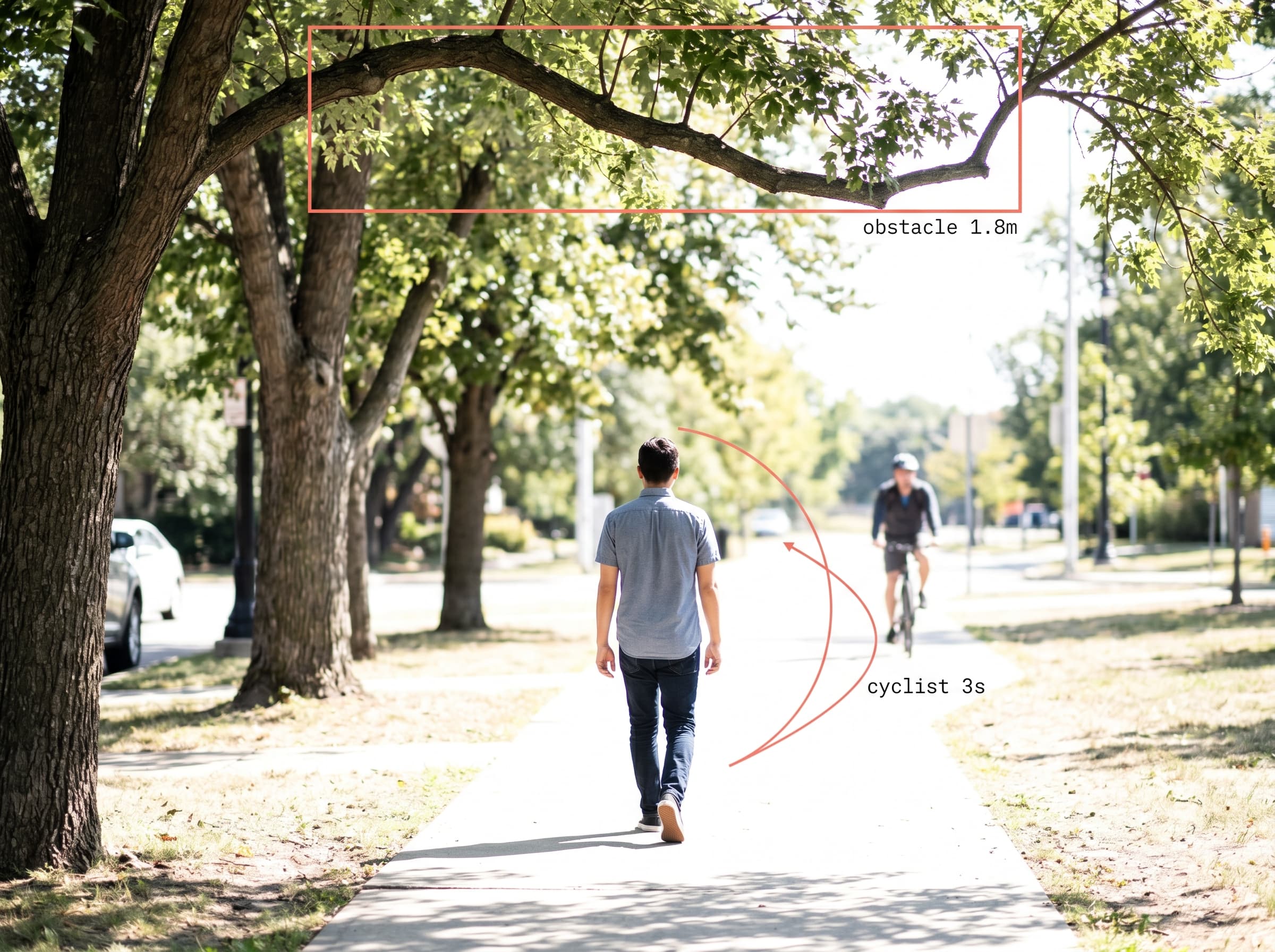
The cane sees the ground. Vajview sees everything.


Active querying vs. ambient awareness.

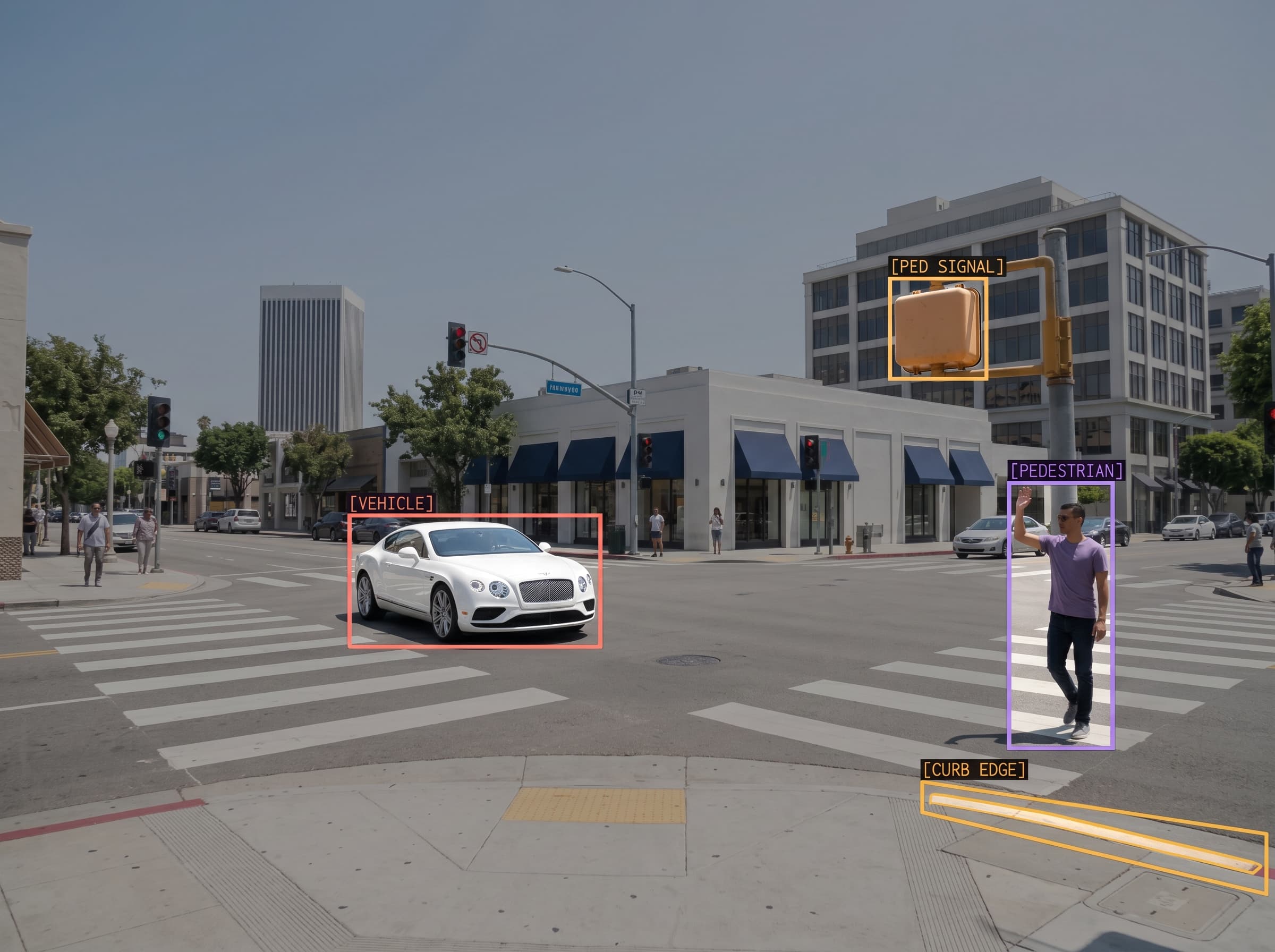
Every AI sees everything. Only Vajview knows what matters.
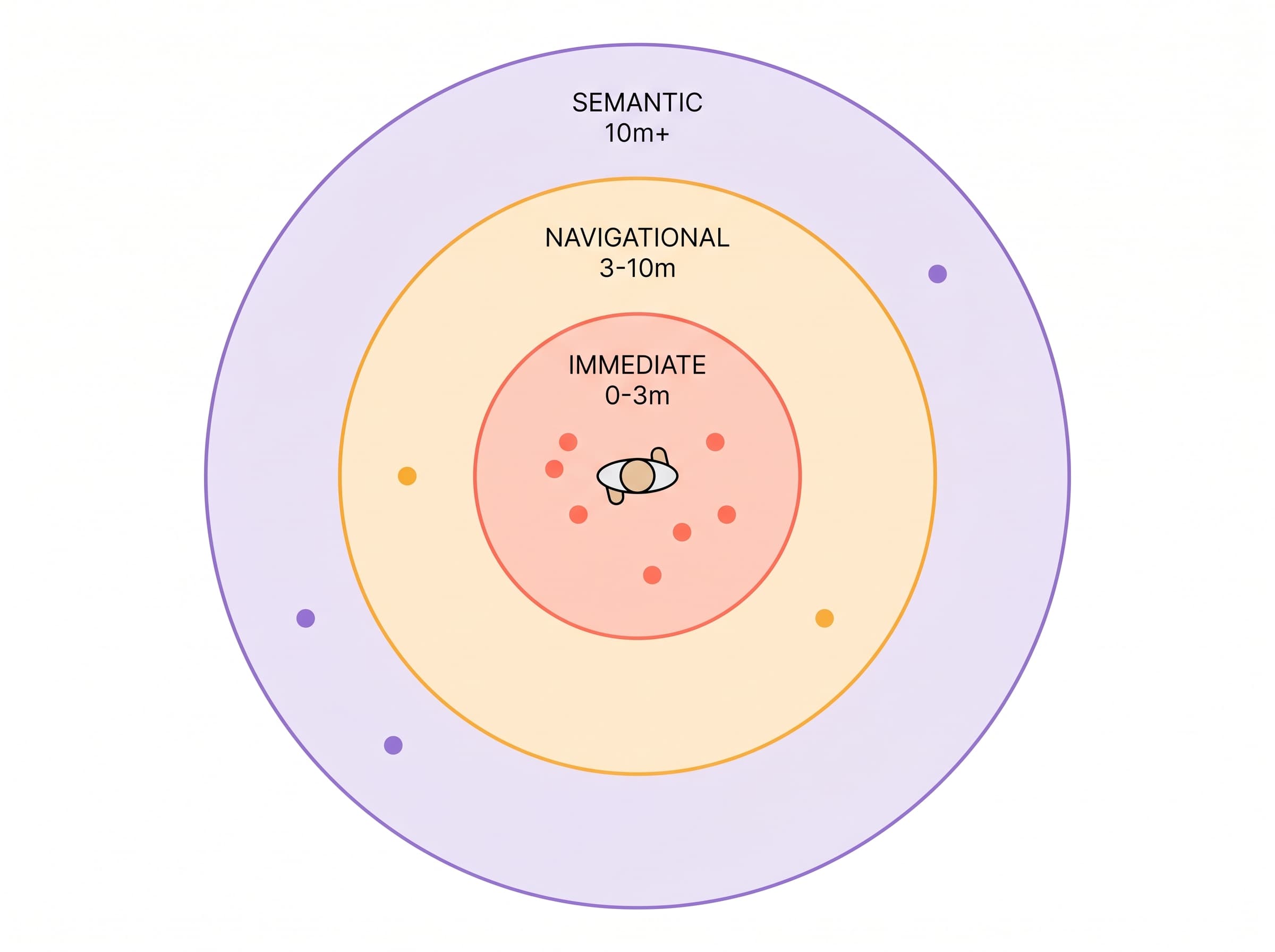
Closer matters more.
Vajview prioritizes what can hurt you over what can inform you. Three zones. Three response speeds.
On-device threat detection. No connection needed.
47ms
Wayfinding, sign reading, route guidance.
Real-time
Full scene comprehension via cloud VLM.
On tap
Two engines. Zero compromise.
The edge keeps you safe. The cloud keeps you informed. Neither waits for the other.
Edge Engine
- Object detection
- Spatial mapping
- Threat classification
47ms
Response time
Spatial Audio
- 360° binaural HRTF
- Directional placement
- Priority-based queuing
360°
Spatial coverage
Cloud VLM
- Vision-language model
- Face recognition
- Scene narration
380ms
Comprehension time
Sound from where the world is.
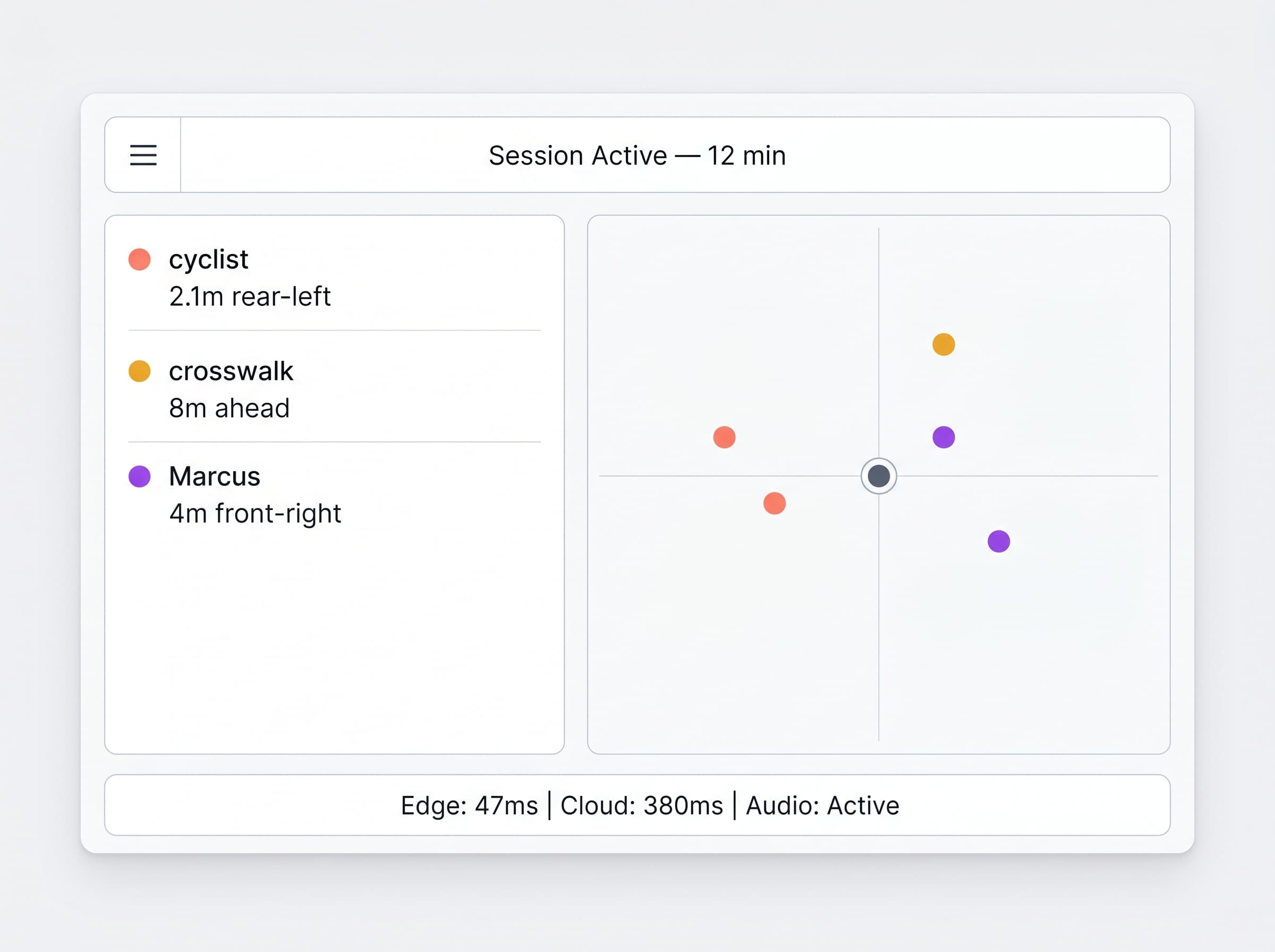
360° binaural HRTF audio places alerts exactly where the object sits in space. A car behind-left sounds behind-left. Your brain maps space without learning anything new.
import { VajviewEngine, Priority } from '@vajview/spatial-core'

const engine = new VajviewEngine({
  edge: { model: 'vj-detect-v3', latency: '50ms' },
  cloud: { model: 'vj-vlm-v2', context: 'navigation' },
  audio: { mode: 'binaural-hrtf', field: '360' },
})

// Immediate threat → spatial audio in 47ms
engine.on('threat', (detection) => {
  engine.audio.emit({
    bearing: detection.bearing,
    distance: detection.distance,
    urgency: Priority.CRITICAL,
  })
})A real engine. A real SDK.
Built for hardware partners who ship. TypeScript-first. Fully typed. Production-ready.
Request SDK Access→Pilot results.
0ms
Edge Response
0+
Pilot Hours
0+
Threats Detected
0
Beta Users
“I knew the café was on my left before I passed it.”
— Pilot participant, London
They build the glasses. We build the brain.
Vajview is pure software — runs on any smart glasses with a camera and audio output. No hardware to build. No inventory to manage.
$0
Hardware cost to us
Pure software. Partners bear hardware R&D.
4+
Platforms supported
Every major smart glasses brand. More quarterly.
85%+
Gross margin
Software economics. No BOM. No inventory.
Consumer SaaS
- Monthly subscription on your glasses.
- Life-critical daily utility.
- Near-zero churn.
Healthcare Subsidy
- Insurance-funded subscriptions.
- Cheaper than human aids.
- Medicare. NHS. Global scale.
Hardware SDK
- License to OEM manufacturers.
- Ships 'accessibility-ready' out of box.
- Revenue per unit. Infinite scale.

Developed alongside clinical researchers and accessibility advocates.
See the world differently.
Join the pilot program. Limited spots for early adopters.